 Add to Chrome
 Add to Firefox
 Add to Edge
Learning Dynamic Graph Representations through Timespan View Contrasts
May 26, 2026
The rich information underlying graphs has inspired further investigation of unsupervised graph representation. Existing studies mainly depend on node features and topological properties within static graphs to create self-supervised signals, neglecting the temporal components carried by real-world graph data, such as timestamps of edges. To overcome this limitation, this paper explores how to model temporal evolution on dynamic graphs elegantly. Specifically, we introduce a new inductive bias, namely temporal translation invariance, which illustrates the tendency of the identical node to keep similar labels across different timespans. Based on this assumption, we develop a dynamic graph representation framework CLDG that encourages the node to maintain locally consistent temporal translation invariance through contrastive learning on different timespans. Except for standard CLDG which only considers explicit topological links, our further proposed CLDG++ additionally employs graph diffusion to uncover global contextual correlations between nodes, and designs a multi-scale contrastive learning objective composed of local-local, local-global, and global-global contrasts to enhance representation capabilities. Interestingly, by measuring the consistency between different timespans to shape anomaly indicators, CLDG and CLDG++ are seamlessly integrated with the task of spotting anomalies on dynamic graphs, which has broad applications in many high-impact domains, such as finance, cybersecurity, and healthcare. Experiments demonstrate that CLDG and CLDG++ both exhibit desirable performance in downstream tasks including node classification and dynamic graph anomaly detection. Moreover, CLDG significantly reduces time and space complexity by implicitly exploiting temporal cues instead of complicated sequence models.

Generalist Graph Anomaly Detection via Prototype-Based Distillation
May 26, 2026Driven by the pressing demand for graph anomaly detection (GAD) in high-stakes domains, the generalist GAD paradigm, which trains a single detector transferable across new graphs, has recently gained growing attention. However, existing methods often rely on scarce and costly annotations for training and sometimes even require few-shot support at inference, which limits their robustness to diverse and unseen anomaly patterns. To address this limitation, we introduce ProMoS, the first unsupervised generalist GAD framework, which detects anomalies by modeling the abundant normality in unlabeled data. ProMoS adopts a knowledge-distillation paradigm to distill normality priors from a frozen self-supervised graph neural network (GNN) teacher to a mixture-of-students model with shared global and lightweight personalized branches, enabling efficient and expressive normality modeling without learning from scratch. We further propose prototype-guided soft-label distillation to align teacher and student in a shared prototype space, enhancing cross-graph generalizability. During inference, ProMoS performs zero-shot anomaly detection on unseen graphs via distillation bias and prototype geometric deviation. Extensive experiments show the effectiveness and efficiency of ProMoS, charting a practical path toward label-free, zero-shot generalist GAD.
TED: Related Party Transaction guided Tax Evasion Detection on Heterogeneous Graph
May 26, 2026Tax evasion causes severe losses of government revenues and disturbs the economic order of fair competition. To help alleviate this problem, the latest tax evasion detection solutions utilize expert knowledge to extract features and then train classifiers to determine whether a company is suspected of tax evasion. However, existing solutions mainly focus on the statistical features of the company, but fail to exploit the rich interactive information in tax scenarios, which affect the detection performance. In this paper, we first model the tax scenario as a heterogeneous graph and study the tax evasion detection problem under the heterogeneous graph model. To improve the performance of tax evasion detection, a novel graph neural network model is proposed to extract the comprehensive information of heterogeneous graphs. Specifically, we use heterogeneous and complex related party transaction groups to filter low-level noise information. Moreover, a hierarchical attention mechanism is designed to capture the deeper structure and semantic information hidden in the related party transaction group. We apply our method to the real risk management system of the tax bureau, and evaluate it on two human-labeled real-world tax datasets. The results demonstrate that our method significantly outperforms the state-of-the-art in the tax evasion detection task.
DBPnet: Damper Characteristics-Based Bayesian Physics-Informed Neural Network for Wheel Load Estimation
May 24, 2026Advanced driver assistance systems (ADAS) play an important role in modern automotive intelligence, significantly enhancing vehicle safety and stability. The performance of ADAS critically relies on accurate and reliable vehicle state estimation, particularly from vehicle dynamic sensors. Among these signals, wheel load is a key variable for chassis control and safety-critical functions, yet it remains difficult to estimate robustly due to complex suspension geometry, nonlinear dynamics, and measurement noise. To address this issue, we propose DBPnet, a Bayesian physics-informed neural network (PINN) with a physics-aware embedding module inspired by damper characteristics. First, this paper presents a suspension linkage-level modeling (SLLM) approach that constructs a nonlinear instantaneous dynamic model by explicitly considering the complex geometric structure of the suspension. Building upon SLLM, Bayesian inference is integrated into the PINN to effectively cope with noise and uncertainty in the vehicle chassis system, thereby improving the model's robustness. Then, a physics-informed loss function is employed to ensure consistency with fundamental physical principles, while the damper characteristics-inspired embedding module extracts temporal variation features of input signals and incorporates them into each layer of the PINN, ensuring that physical observations guide the neural network without being constrained by fixed physical models. Extensive evaluations on high-fidelity simulations and real-world experiments demonstrate that our DBPnet consistently achieves lower RMSE and MaxError than baseline methods. These results highlight the potential of our DBPnet to advance wheel load estimation and contribute to the development of more reliable ADAS actuator functions.
Case-Aware Medical Image Classification with Multimodal Knowledge Graphs and Reliability-Guided Refinement
May 21, 2026Deep learning has brought significant progress to medical image classification, yet most existing methods still rely on isolated visual evidence and cannot effectively leverage similar cases or external knowledge. In clinical practice, diagnosis is typically supported by historical similar cases and their associated symptoms. To simulate this diagnostic process, we propose a framework that performs case-aware reasoning using multimodal knowledge graphs for explainable medical image diagnosis. Given an input image, our method constructs a multimodal knowledge graph from adaptively retrieved similar cases, enabling more effective utilization of related samples. We further introduce a knowledge propagation and injection mechanism, where an image-centric Graph Attention Network propagates knowledge semantics to obtain case-based features, followed by a bidirectional cross-modal attention mechanism that injects these features into visual representations for cross-modal alignment. To mitigate noisy retrieval, we design a confidence-calibrated decision refinement scheme that estimates the reliability of each retrieved case by jointly considering prediction confidence and sample similarity, adaptively adjusting its contribution to the final prediction and providing interpretable case-level evidence. Extensive experiments on multiple medical imaging datasets show that our approach consistently outperforms strong baselines, and ablation studies validate the effectiveness of each component. The source code is publicly available at https://anonymous.4open.science/r/MKG-CARE-8B7B.
Strategic Navigation or Stochastic Search? How Agents and Humans Reason Over Document Collections
Mar 12, 2026Multimodal agents offer a promising path to automating complex document-intensive workflows. Yet, a critical question remains: do these agents demonstrate genuine strategic reasoning, or merely stochastic trial-and-error search? To address this, we introduce MADQA, a benchmark of 2,250 human-authored questions grounded in 800 heterogeneous PDF documents. Guided by Classical Test Theory, we design it to maximize discriminative power across varying levels of agentic abilities. To evaluate agentic behaviour, we introduce a novel evaluation protocol measuring the accuracy-effort trade-off. Using this framework, we show that while the best agents can match human searchers in raw accuracy, they succeed on largely different questions and rely on brute-force search to compensate for weak strategic planning. They fail to close the nearly 20% gap to oracle performance, persisting in unproductive loops. We release the dataset and evaluation harness to help facilitate the transition from brute-force retrieval to calibrated, efficient reasoning.
HiMAP: History-aware Map-occupancy Prediction with Fallback
Feb 19, 2026Accurate motion forecasting is critical for autonomous driving, yet most predictors rely on multi-object tracking (MOT) with identity association, assuming that objects are correctly and continuously tracked. When tracking fails due to, e.g., occlusion, identity switches, or missed detections, prediction quality degrades and safety risks increase. We present \textbf{HiMAP}, a tracking-free, trajectory prediction framework that remains reliable under MOT failures. HiMAP converts past detections into spatiotemporally invariant historical occupancy maps and introduces a historical query module that conditions on the current agent state to iteratively retrieve agent-specific history from unlabeled occupancy representations. The retrieved history is summarized by a temporal map embedding and, together with the final query and map context, drives a DETR-style decoder to produce multi-modal future trajectories. This design lifts identity reliance, supports streaming inference via reusable encodings, and serves as a robust fallback when tracking is unavailable. On Argoverse~2, HiMAP achieves performance comparable to tracking-based methods while operating without IDs, and it substantially outperforms strong baselines in the no-tracking setting, yielding relative gains of 11\% in FDE, 12\% in ADE, and a 4\% reduction in MR over a fine-tuned QCNet. Beyond aggregate metrics, HiMAP delivers stable forecasts for all agents simultaneously without waiting for tracking to recover, highlighting its practical value for safety-critical autonomy. The code is available under: https://github.com/XuYiMing83/HiMAP.
PILD: Physics-Informed Learning via Diffusion
Jan 29, 2026Diffusion models have emerged as powerful generative tools for modeling complex data distributions, yet their purely data-driven nature limits applicability in practical engineering and scientific problems where physical laws need to be followed. This paper proposes Physics-Informed Learning via Diffusion (PILD), a framework that unifies diffusion modeling and first-principles physical constraints by introducing a virtual residual observation sampled from a Laplace distribution to supervise generation during training. To further integrate physical laws, a conditional embedding module is incorporated to inject physical information into the denoising network at multiple layers, ensuring consistent guidance throughout the diffusion process. The proposed PILD framework is concise, modular, and broadly applicable to problems governed by ordinary differential equations, partial differential equations, as well as algebraic equations or inequality constraints. Extensive experiments across engineering and scientific tasks including estimating vehicle trajectories, tire forces, Darcy flow and plasma dynamics, demonstrate that our PILD substantially improves accuracy, stability, and generalization over existing physics-informed and diffusion-based baselines.
One Tool Is Enough: Reinforcement Learning for Repository-Level LLM Agents
Dec 24, 2025Locating the files and functions requiring modification in large open-source software (OSS) repositories is challenging due to their scale and structural complexity. Existing large language model (LLM)-based methods typically treat this as a repository-level retrieval task and rely on multiple auxiliary tools, which overlook code execution logic and complicate model control. We propose RepoNavigator, an LLM agent equipped with a single execution-aware tool-jumping to the definition of an invoked symbol. This unified design reflects the actual flow of code execution while simplifying tool manipulation. RepoNavigator is trained end-to-end via Reinforcement Learning (RL) directly from a pretrained model, without any closed-source distillation. Experiments demonstrate that RL-trained RepoNavigator achieves state-of-the-art performance, with the 7B model outperforming 14B baselines, the 14B model surpassing 32B competitors, and even the 32B model exceeding closed-source models such as Claude-3.7. These results confirm that integrating a single, structurally grounded tool with RL training provides an efficient and scalable solution for repository-level issue localization.
Joint Radiation Power, Antenna Position, and Beamforming Optimization for Pinching-Antenna Systems with Motion Power Consumption
Jul 03, 2025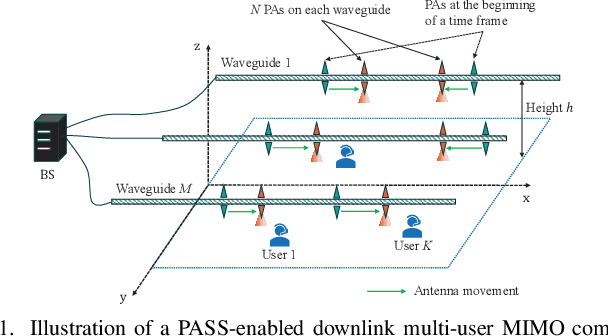
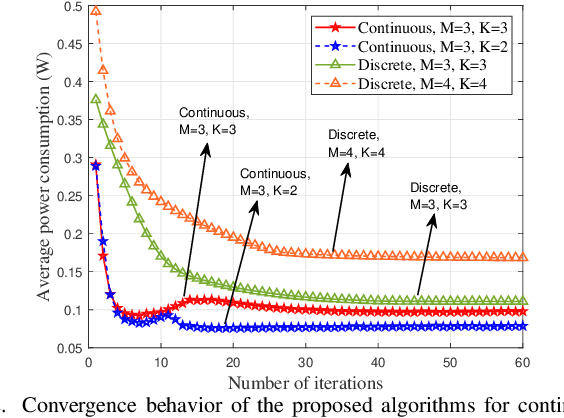
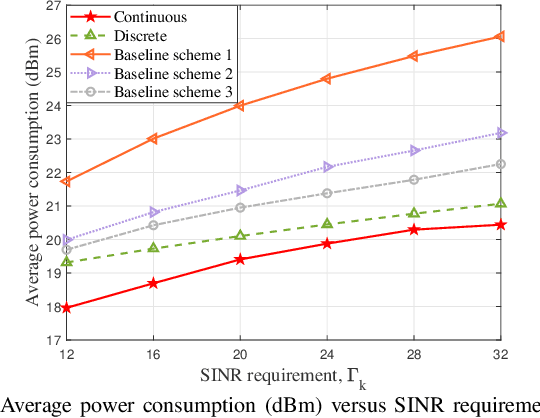
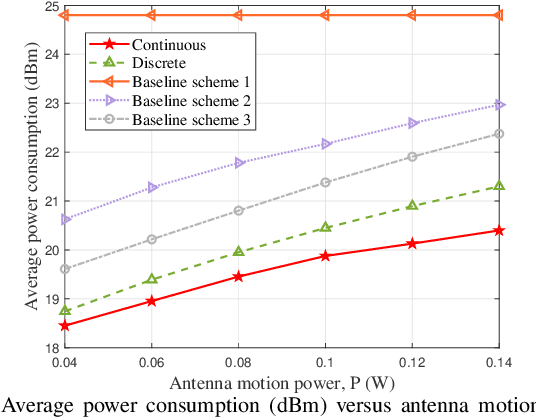
Pinching-antenna systems (PASS) have been recently proposed to improve the performance of wireless networks by reconfiguring both the large-scale and small-scale channel conditions. However, existing studies ignore the physical constraints of antenna placement and assume fixed antenna radiation power. To fill this research gap, this paper investigates the design of PASS taking into account the motion power consumption of pinching-antennas (PAs) and the impact of adjustable antenna radiation power. To that end, we minimize the average power consumption for a given quality-of-service (QoS) requirement, by jointly optimizing the antenna positions, antenna radiation power ratios, and transmit beamforming. To the best of the authors' knowledge, this is the first work to consider radiation power optimization in PASS, which provides an additional degree of freedom (DoF) for system design. The cases with both continuous and discrete antenna placement are considered, where the main challenge lies in the fact that the antenna positions affect both the magnitude and phase of the channel coefficients of PASS, making system optimization very challenging. To tackle the resulting unique obstacles, an alternating direction method of multipliers (ADMM)-based framework is proposed to solve the problem for continuous antenna movement, while its discrete counterpart is formulated as a mixed integer nonlinear programming (MINLP) problem and solved by the block coordinate descent (BCD) method. Simulation results validate the performance enhancement achieved by incorporating PA movement power assumption and adjustable radiation power into PASS design, while also demonstrating the efficiency of the proposed optimization framework. The benefits of PASS over conventional multiple-input multiple-output (MIMO) systems in mitigating the large-scale path loss and inter-user interference is also revealed.